
How to Choose the Right Micropipette for Your Laboratory
Choosing a micropipette is not simply a matter of selecting a volume range. The right instrument should match the volumes you transfer, the number of samples you process, your contamination-control process, and the accuracy and documentation your laboratory requires. A well-matched micropipette supports reliable liquid handling; an unsuitable one can make routine work slower, less comfortable, and harder to control.
This guide explains how to choose a micropipette for research, diagnostic, educational, pharmaceutical, industrial, and routine laboratory applications. Use it as a practical starting point, then confirm the current product specification, operating instructions, compatible tips, and suitability for your exact workflow before purchase.
Quick Micropipette Selection Guide
| Your requirement | A suitable starting choice | What to check next |
| One repeated transfer volume | Fixed-volume micropipette | Exact nominal volume, tip fit, and repeatability needs |
| Several transfer volumes | Variable-volume micropipette | Minimum and maximum working volume |
| One tube or sample at a time | Single-channel micropipette | Volume range and daily workload |
| Multiple wells in a plate | Multichannel micropipette | Channel count, plate format, and tip seating |
| Small-volume molecular work | Small-volume variable model | Lower-range performance, compatible tips, and contamination controls |
| Repetitive daily pipetting | Ergonomic variable or multichannel model | Plunger force, grip comfort, and service support |
| Sterile or contamination-sensitive work | Model with approved cleaning or autoclaving instructions | What can be sterilised, method, and post-cleaning checks |
The Five Decisions That Determine the Right Micropipette
1. Start With the Volume You Actually Need to Transfer
The first rule of micropipette selection is to define the smallest and largest volume required in your normal workflow. Do not select a model only because its maximum capacity appears suitable. For consistent results, select a range that covers your transfer volume comfortably and follow the instrument’s approved operating range.
For example, a laboratory routinely transferring 50 µL should select a model designed for that working range rather than using a very large-capacity instrument at an unsuitable end of its scale. When a workflow covers very small and larger volumes, two or more micropipettes may be more appropriate than trying to use one instrument for every task.
| Required transfer volume | Common nominal range to consider | Typical laboratory use |
| 1–10 µL | 0.5–10 µL or 1–10 µL | PCR, molecular biology, enzyme and reagent work |
| 10–100 µL | 10–100 µL | Assays, sample preparation, reagent transfer |
| 20–200 µL | 20–200 µL | General laboratory liquid handling |
| 100–1000 µL | 100–1000 µL | Buffers, dilutions, sample and reagent transfer |
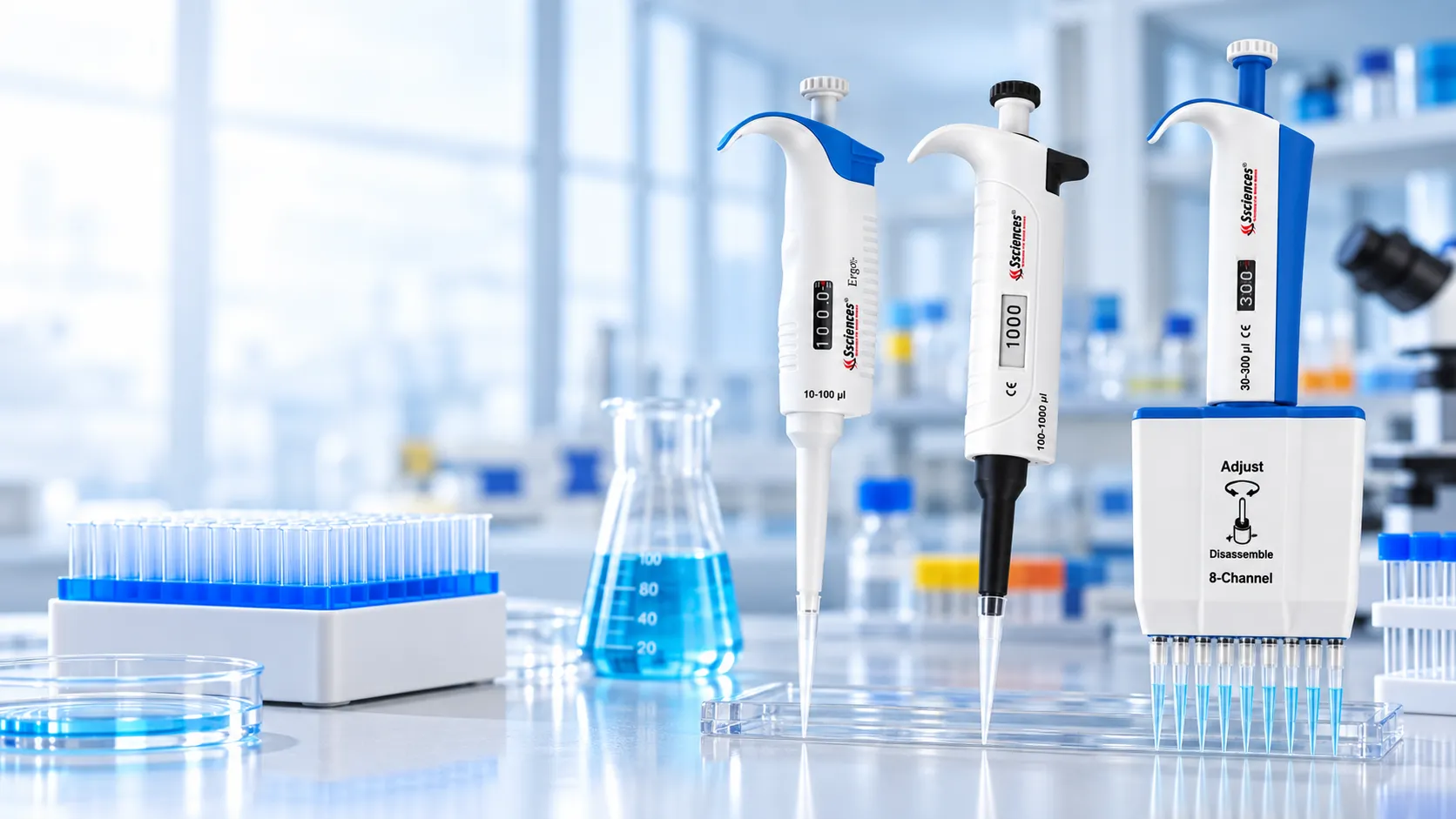
Practical question: What are the minimum, normal, and maximum transfer volumes in the procedure you perform most often? Record all three before selecting a model.
2. Choose Between Fixed-Volume and Variable-Volume Micropipettes
A fixed-volume micropipette dispenses one defined volume. It is a practical choice when you use the same volume repeatedly, such as in a standard routine procedure, a teaching exercise, or a specific assay step. Its simple configuration can help reduce the risk of selecting the wrong setting during repetitive work.
A variable-volume micropipette allows the operator to set different volumes within its approved range. It is generally more flexible for research, general laboratory work, sample preparation, and workflows where volume requirements change frequently.
| Feature | Fixed-volume micropipette | Variable-volume micropipette |
| Dispensing volume | One set nominal volume | Adjustable within the approved range |
| Best for | Repeated, standardised transfers | Changing volumes and varied laboratory tasks |
| Main advantage | Simplicity for repetitive use | Flexibility across multiple procedures |
| Main consideration | A separate model may be needed for another volume | Select the correct range; confirm the setting before use |
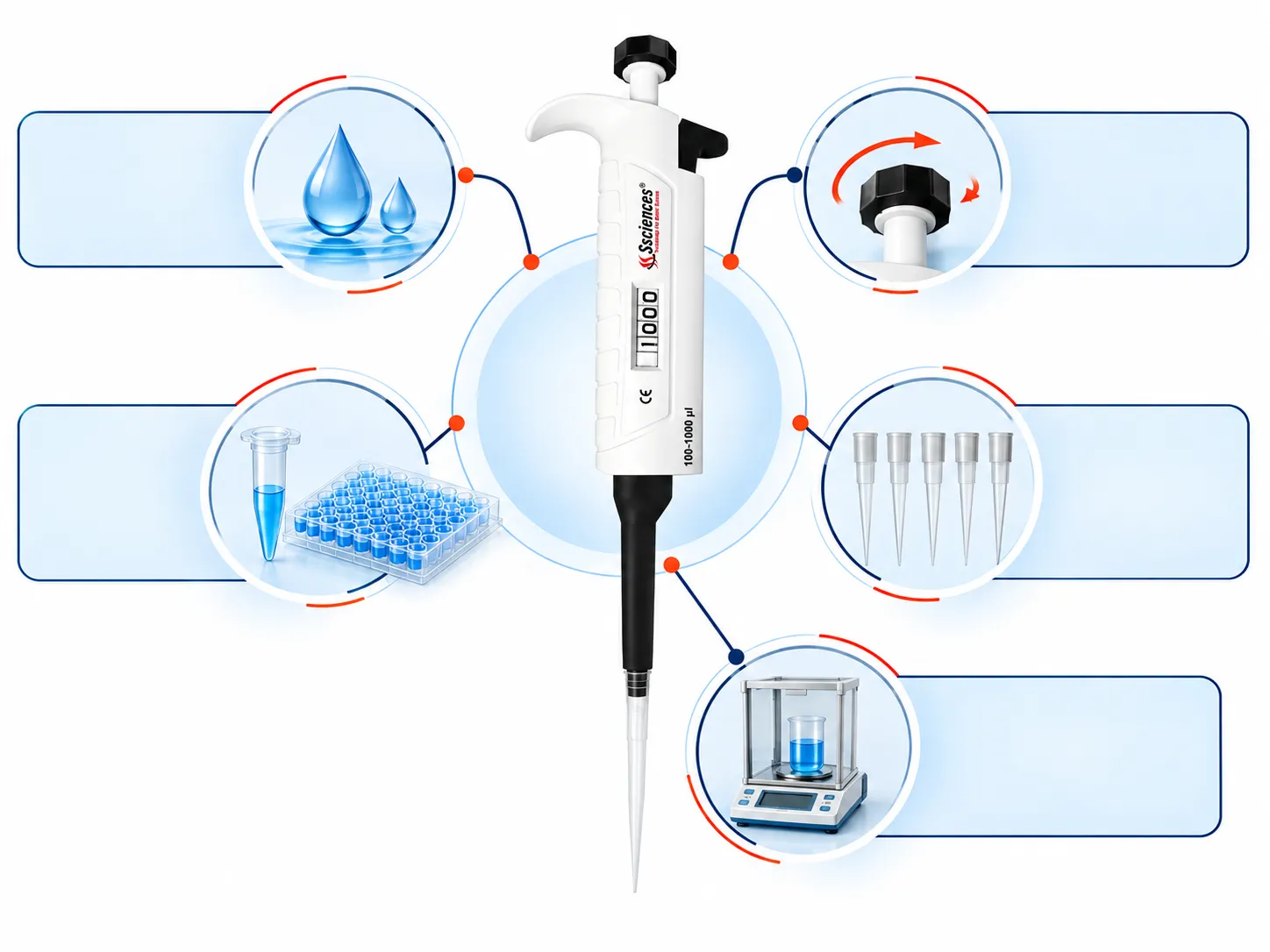
Neither format is automatically better. The correct choice depends on whether consistency at one volume or flexibility across several volumes is more valuable in your workflow.
3. Choose Single-Channel or Multichannel According to Throughput
A single-channel micropipette is intended for one sample or one vessel at a time. It is the most flexible option for tubes, microcentrifuge tubes, bottles, individual sample preparation, and laboratories with varied daily tasks.
A multichannel micropipette is designed to aspirate and dispense through multiple channels simultaneously. It can improve efficiency in plate-based work such as ELISA, PCR plate preparation, screening, and other workflows using microplates. The benefit is not only speed: it can also help standardise repeated transfers when used correctly with appropriate tips and plate formats.
| Workflow | Best starting configuration | Why |
| Individual tubes and mixed procedures | Single-channel | Maximum flexibility |
| Routine educational practicals | Single-channel or fixed-volume | Easy handling and clear volume control |
| ELISA or 96-well plate work | Multichannel | Faster repeated transfers across wells |
| Plate-based PCR preparation | Multichannel where the workflow supports it | Helps manage repeated dispensing steps |
| Low-volume specialised work | Single-channel small-volume model | Greater control over individual transfers |
Before choosing a multichannel micropipette, confirm the actual channel count offered, the compatible plate format, the approved volume range, and the method for checking tip seating and channel performance.
4. Treat Accuracy, Precision, and Calibration as Purchase Factors
Accuracy and precision are related but different. Accuracy describes how close the average delivered volume is to the selected volume. Precision describes how closely repeated dispensing results agree with one another. A micropipette should be assessed for both characteristics.
Calibration is also not a one-time buying feature. It is part of the instrument’s lifecycle. Laboratories should define a verification or calibration interval based on usage frequency, application risk, laboratory quality procedures, number of operators, environmental conditions, and performance history.
When comparing micropipettes, ask for current technical documentation that identifies the volume range, performance information, operating instructions, compatible tips, and support route. For laboratories requiring traceable or accredited calibration, confirm the required documentation and the capability of the calibration laboratory before finalising a purchase.
Do not assume that display resolution, a certificate name, or a marketing statement alone proves accuracy or calibration suitability. The relevant documentation, test conditions, and laboratory procedure matter.
5. Check Ergonomics, Tips, Cleaning, and Support
Laboratories often focus first on volume range and price, but daily usability has a direct effect on the operator and workflow. A micropipette used repeatedly should feel balanced, have a controllable plunger action, allow clear volume setting, and work with correctly fitting tips.
Tip compatibility is important because a poorly fitting tip can contribute to leakage, inconsistent aspiration, poor dispensing, or unreliable results. Use tips recommended or verified for the selected model and follow the correct fitting technique. For contamination-sensitive procedures, evaluate tip type, workflow separation, cleaning requirements, and the manufacturer’s instructions for any autoclavable parts.
Ask these questions before purchase:
- Is the volume display clear and easy to confirm?
- Does the tip fit securely and consistently on the selected model?
- Is the instrument comfortable for the expected daily workload?
- Are operating, cleaning, and maintenance instructions available?
- What support, spare parts, warranty, and calibration guidance are available?
- Can the product be used appropriately within your laboratory’s quality system?
Micropipette Selection by Laboratory Application
PCR and Molecular Biology Workflows
PCR and molecular biology procedures often involve small volumes, multiple reagents, and a need for careful contamination control. Start by mapping every transfer volume in the protocol, including master-mix, template, primers, and controls. Consider the relevant small-volume range, compatible tips, workflow separation, and the need for a multichannel option in plate-based procedures.
Diagnostic and Pathology Laboratories
Diagnostic workflows may involve high repetition, defined test-kit procedures, trained operators, and documentation requirements. Selection should account for standard transfer volumes, throughput, calibration or verification records, tip availability, training, and service support. The product should support the laboratory procedure; it should not be described as a substitute for the laboratory’s own validated method or quality controls.
Educational Laboratories
For teaching laboratories, select models that are easy to understand, comfortable to handle, and suited to the practical volumes students will use. A robust set of standard ranges, clear operating instructions, compatible tips, and basic maintenance guidance can be more useful than unnecessary complexity.
Pharmaceutical, Quality-Control, and Industrial Laboratories
These environments may require more formal documentation, controlled handling, cleaning procedures, calibration planning, and supplier due diligence. Confirm current specifications, operating instructions, material compatibility where relevant, and the laboratory’s requirements for records and traceability.
Buyer Checklist: What to Confirm Before Ordering
Use this checklist when requesting a quotation or comparing models:
- Minimum, normal, and maximum transfer volume
- Required number of channels
- Fixed-volume or variable-volume requirement
- Primary application: research, diagnostics, teaching, PCR, ELISA, QC, or another workflow
- Number of transfers or plates processed per day
- Required level of accuracy, precision, and documentation
- Tip type and verified compatibility
- Cleaning, decontamination, or autoclaving requirement
- Availability of current specification sheet and instructions
- Calibration, maintenance, warranty, and support requirements
- Quantity required and delivery location
Matching Your Requirement to an SSCIENCES Micropipette
SSCIENCES offers micropipette options for laboratory liquid-handling requirements. The final recommendation should always be based on the current approved specification sheet, required volume range, application, throughput, and compatible tips.
For an informed recommendation, share the following details with the SSCIENCES team:
- Your minimum and maximum transfer volume
- Your application or test workflow
- Single-channel or multichannel requirement
- Expected daily workload or number of plates
- Required quantity and delivery location
- Any requirement for calibration documentation, cleaning, or autoclaving
Explore relevant products:
- View SSCIENCES Micropipettes
- Explore Mini Micropipettes
- Explore Variable-Volume Micropipettes
- Explore Fully Autoclavable Micropipettes
- Explore Multichannel Micropipettes
- Request a Quote or Technical Recommendation
Related Guides
- Micropipette Price in India: Buying Guide
- Top Micropipette Brands in India
- Micropipette Calibration Guide
Frequently Asked Questions
How do I choose the correct micropipette volume range?
Start with the minimum and maximum volume used in your routine procedure. Choose a micropipette whose approved range covers the transfer volume appropriately, and confirm its current specification before purchase. Laboratories handling several distinct ranges may require more than one micropipette.
Is a fixed-volume or variable-volume micropipette better?
Fixed-volume micropipettes are useful for one repeated volume, while variable-volume micropipettes are better suited to workflows requiring several different volumes. The better option depends on the procedure, not on a universal preference.
When should I choose a multichannel micropipette?
Choose a multichannel micropipette when your workflow includes repeated transfers across compatible microplate wells, such as ELISA or plate-based PCR preparation. Confirm the channel count, plate format, volume range, and compatible tips before purchase.
Why are compatible pipette tips important?
Compatible tips help create a secure fit between the tip and micropipette. Poor fit can contribute to leakage, inconsistent aspiration, and inaccurate dispensing. Use tips verified or recommended for the selected model.
How often should a micropipette be calibrated?
The interval depends on use frequency, application risk, laboratory quality requirements, number of operators, and previous performance history. Establish a documented schedule appropriate to your laboratory and confirm the required type of calibration documentation.
Are all micropipettes autoclavable?
No. Autoclavability is model-specific and may apply to only certain components. Always follow the current approved operating and cleaning instructions for the exact model rather than assuming a general autoclave process applies.
Final Recommendation
The right micropipette is the one that matches your volume range, application, throughput, tip system, quality requirements, and operator workflow. Start with the volume and task, then compare fixed or variable operation, channel count, performance documentation, comfort, cleaning requirements, and support. A structured selection process helps laboratories purchase equipment that is suitable not only on the day of purchase, but throughout its working life.
India’s No. 1 brand – Buy Ssciences 20-200µl Variable Mechanical Operation Micropipette, Online At Best Price On Moglix